Date added: 18/06/2025
Well done job

“The carpenter, lab technician, and conductor are all craftsmen because they are dedicated to good work for its own sake.”
– Richard Sennett, “The Craftsman”
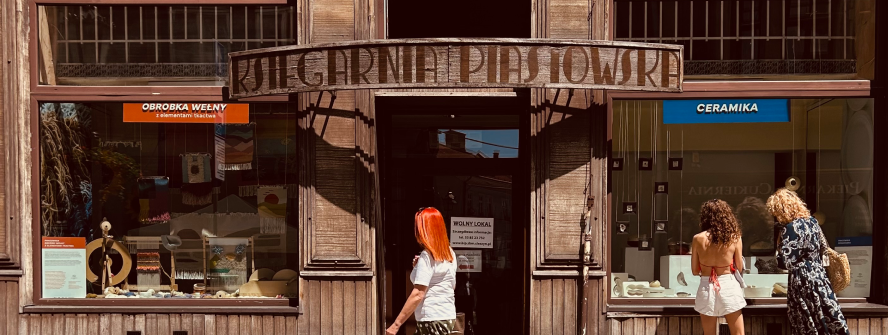
Last weekend, I completed my studies at the Cieszyn School of Crafts, in the ceramics studio led by masters Beata and Bogdan Kosak. The official graduation ceremony was combined with a tour of the exhibitions of this year’s graduates. Works by graduates of six craft disciplines were displayed on the grounds of the Castle and in windows in the Cieszyn city center.
It was a very hot Sunday. Not only because of the truly summer-like temperatures, but also because of the emotions that accompanied everything.
My stay at the School of Crafts was an intense journey and a very vivid experience. I didn’t have time to calm down enough to organize my initial thoughts, and I had to accelerate my reflection during the guided tours of the exhibitions. I was asked to present the “ceramics display case” located in the Piastowska Bookstore to the visitors. Leaning out of my comfort zone for a moment, I attempted to encompass nearly a year of experiences, conversations, reflections, and a challenging process of both conceptual and physical work in a five-minute narrative.
Now that things have calmed down a bit, I decided to revisit this story, focusing on the process foundations, which were established long before my groupmates and I set foot, still uncoated by plaster dust, in the ceramics studio at Cieszyn Castle…
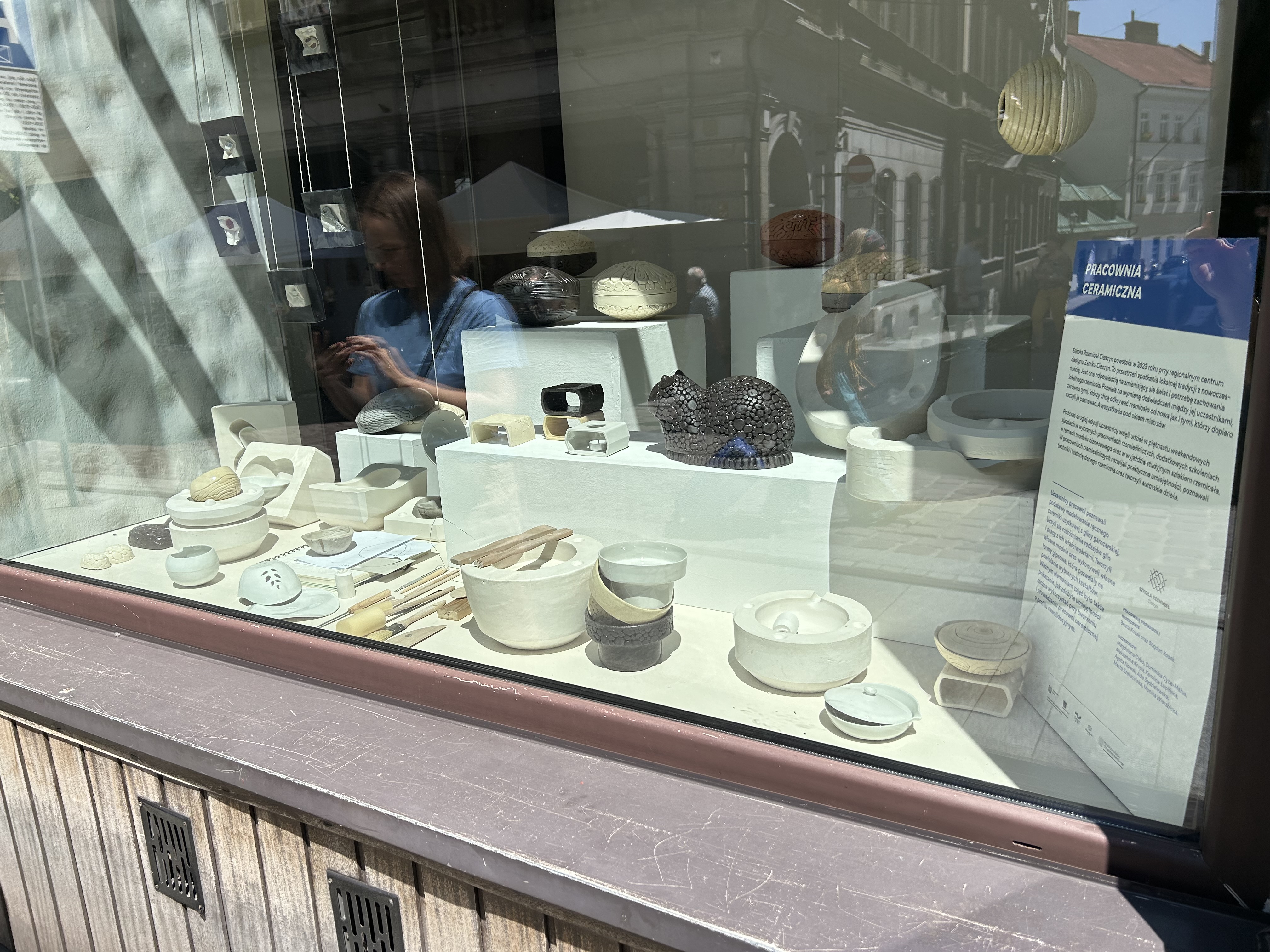
Fragment of the final exhibition of the Craft School 2025, in the windows of the Piastowska Bookstore in Cieszyn (Ceramics).
Before I discuss the work process and my experiences, I would like to highlight two very important aspects of learning ceramics, which I consider extremely important.
The first is meeting experienced individuals who specialize in their chosen field of ceramics and possess extensive knowledge of ceramics as a craft. The second aspect, which can be extremely helpful, is a well-defined and confidently conducted educational process. In such a process, a clear direction is set from the outset, and students are familiar with the basic assumptions regarding the expected results. At the same time, the process is open enough that everyone has space for their own expression within the established framework.
I discovered both aspects at the School of Crafts, and I discovered another, perhaps most important, element: mindfulness. Mindfulness as a craftsman’s practice, but also, and perhaps above all, mindfulness in encounters with others and a constant curiosity about the needs of the world around us.
Craft in the Kosaks’ Rehabilitation Ceramics Studio Project
The framework for our work in the castle ceramics studio was outlined at the first September meetings. Our training was to focus on the highly specialized field of creating plaster molds for the production of ceramic objects. At the same time, the learning process and the creation of our own molds were integrated into the much broader framework designed by our Masters for a new type of studio.
In other words, in our process of learning the craft, we became apprentices, but we also became co-responsible for the process, acting as testers. Our work plan enabled and encouraged us to share feedback on the vision of the Rehabilitation Ceramics Studio.
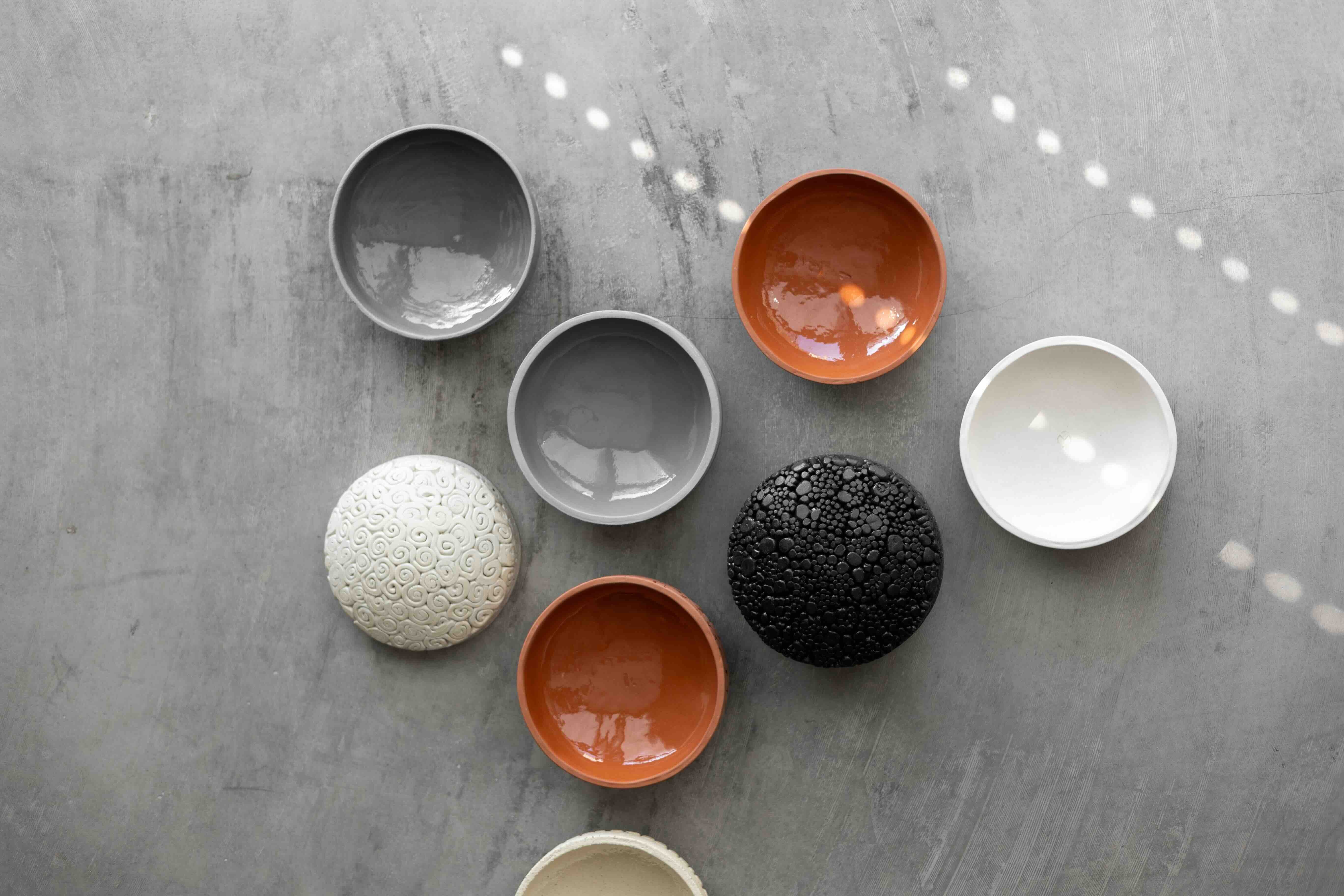
The photo shows Misaki, which was created as part of a form-working exercise in class. Form design by Beata and Bogdan Kosak, photo by Lucyna Michalak-Gajda.
The Rehabilitation Ceramics Workshop is a new educational and therapeutic process that utilizes clay work and specially designed plaster molds. The materials currently being developed will enable the implementation of a new ceramics workshop model in institutions working with individuals from diverse backgrounds who benefit from support and rehabilitation activities.
If I were to briefly summarize the key value of the Rehabilitation Ceramics Workshop process, I would see it as a response to human needs in relation to work:
- The Need for Accessibility – creating conditions and tools so that anyone involved in the process of creating a ceramic object can create it. The work is performed based on a ready-made plaster mold, which is filled with clay.
- The Need for a Sense of Agency and Adaptation – developing tasks and plaster molds to suit various skills and dexterity limitations. At the same time, the mold designs provide space for individual expression and an original approach to the task.
- The Need for a Sense of Satisfaction from a job well done – unique clay works are created based on the design of molds for useful and aesthetically pleasing objects. The final items are characterized by the originality of the artist who molded them and can be offered commercially. This contributes to the budget of the studios, which will incorporate rehabilitation classes into their programs.
What deserves emphasis is the ongoing reflection on the project’s assumptions and the time devoted to refining the details and testing. From the outset, the concept was consulted with psychologists, and the role of an experienced therapist in the studio is a crucial element of the final process.
As part of the Craft School, we tested one of the methods to be used in the studio. Specifically, it involves introducing students to clay and practical applications of various molding techniques. Our experiments with the finished Misaki molds, created for the studio by Mr. and Mrs. Kosak, allowed us to formulate further ideas and discover new layers of needs that this method of work can address.
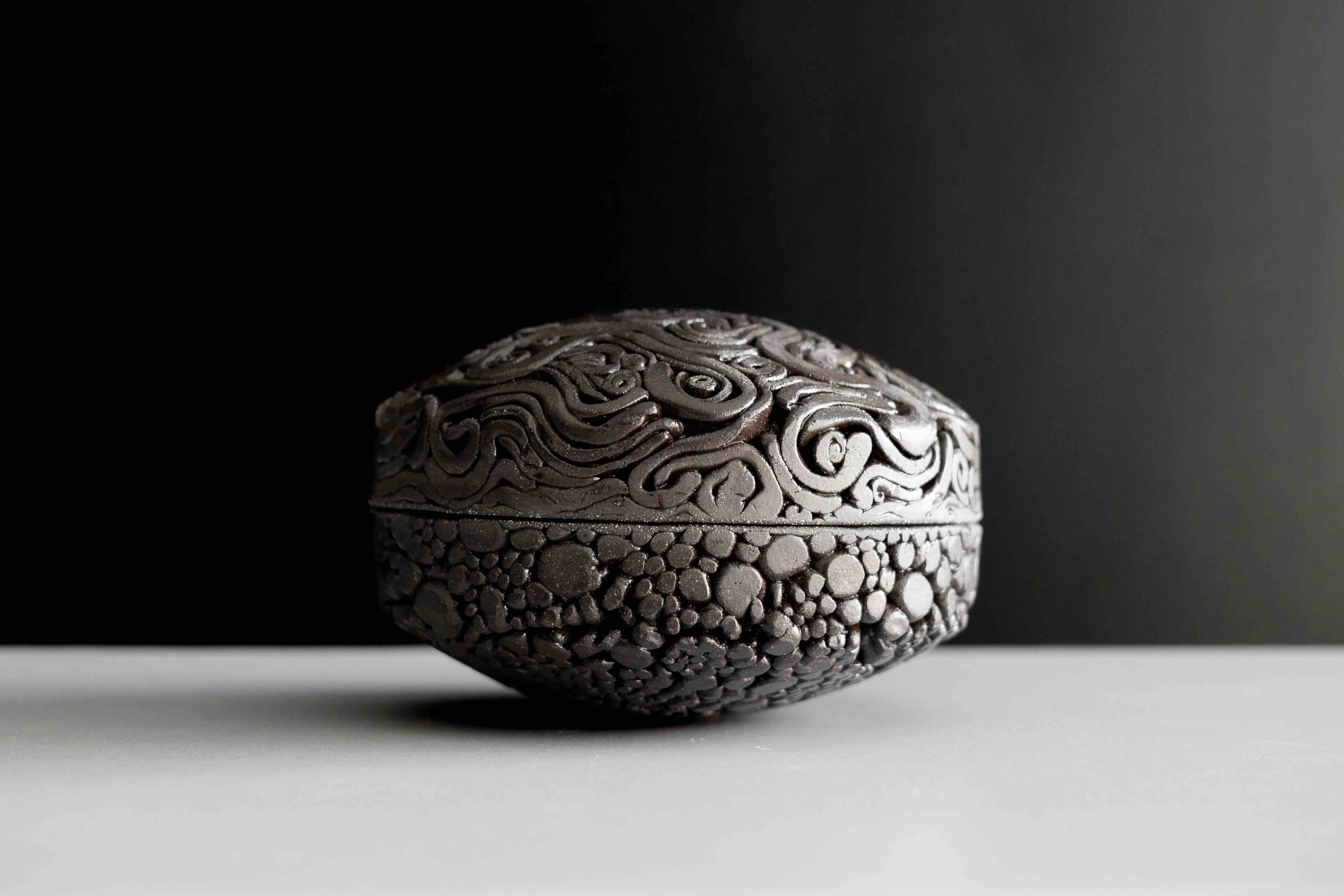
Misaki wylepione przeze mnie, w formie projektu Beaty i Bogdana Kosak. Zdjęcie Lucyna Michalak-Gajda
Stepping into the shoes of the beneficiaries of the Rehabilitation Ceramics Workshop was an important warm-up, allowing us to move closer to the next stage – designing plaster molds tailored to the project.
Thoughts still being formed in the heat of the moment
I will devote another post to working with plaster, designing and creating my own plaster mold. It’s an integral part of the learning process, and such a fascinating challenge that it deserves its own story.
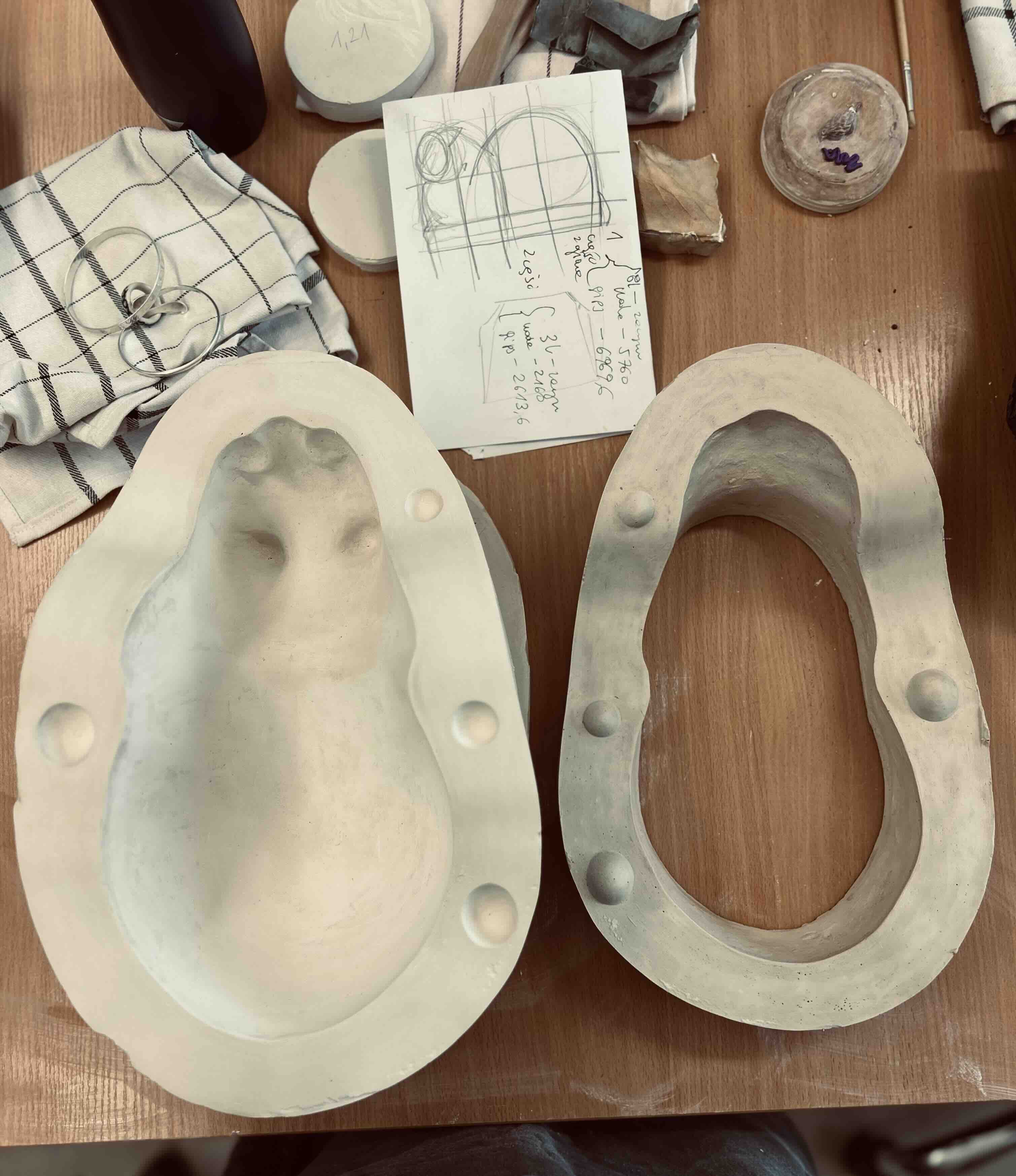
The Catloaf mold was created during classes at the Ceramics Workshop at Cieszyn Castle. Craft School 2025.
I will emphasize, however, that the project proved inspiring, but also very demanding on many levels. I began by learning a completely new material and exploring a technique that required revisiting forgotten geometry lessons, and I ended up in a place of serious reconsideration of how I think about myself as a creator.
The idea of the Rehabilitation Ceramics Studio required me to dive into a place where I faced the fact that someone would use the object I designed. And more importantly, someone else would actually shape it. My role is to develop the concept and create the form to provide others with favorable initial conditions for satisfying work.
This experience showed me that ceramics is a craft that thrives among people, and in the studio it can become a “team game.” Someone designs the form, someone else fills it, and yet another person oversees the process, moderates it, and ensures the comfort of those involved. In the end, an object with a unique character is created, which delights new people who want to purchase it. These people give it new meaning, in the context of their choosing. The key to this process is a job well done.
It’s not over…
The end of the year celebration at the School of Crafts was a fervent affair. Masters spoke with appreciation for the students’ perseverance. Graduates expressed their gratitude to the Masters.
Many words were spoken, and I searched for those that best captured the experience of the process over the past ten months. They only came to me the next day.
Sometimes, especially to children you haven’t seen in a while, say, “You’ve grown so much… you’ve grown so much.” That’s exactly how I feel now. I’ve grown a little more and matured a little more. I’m grateful for this gift of growth and shared work. I especially thank the Masters and my colleagues, and I look forward to our next meetings.
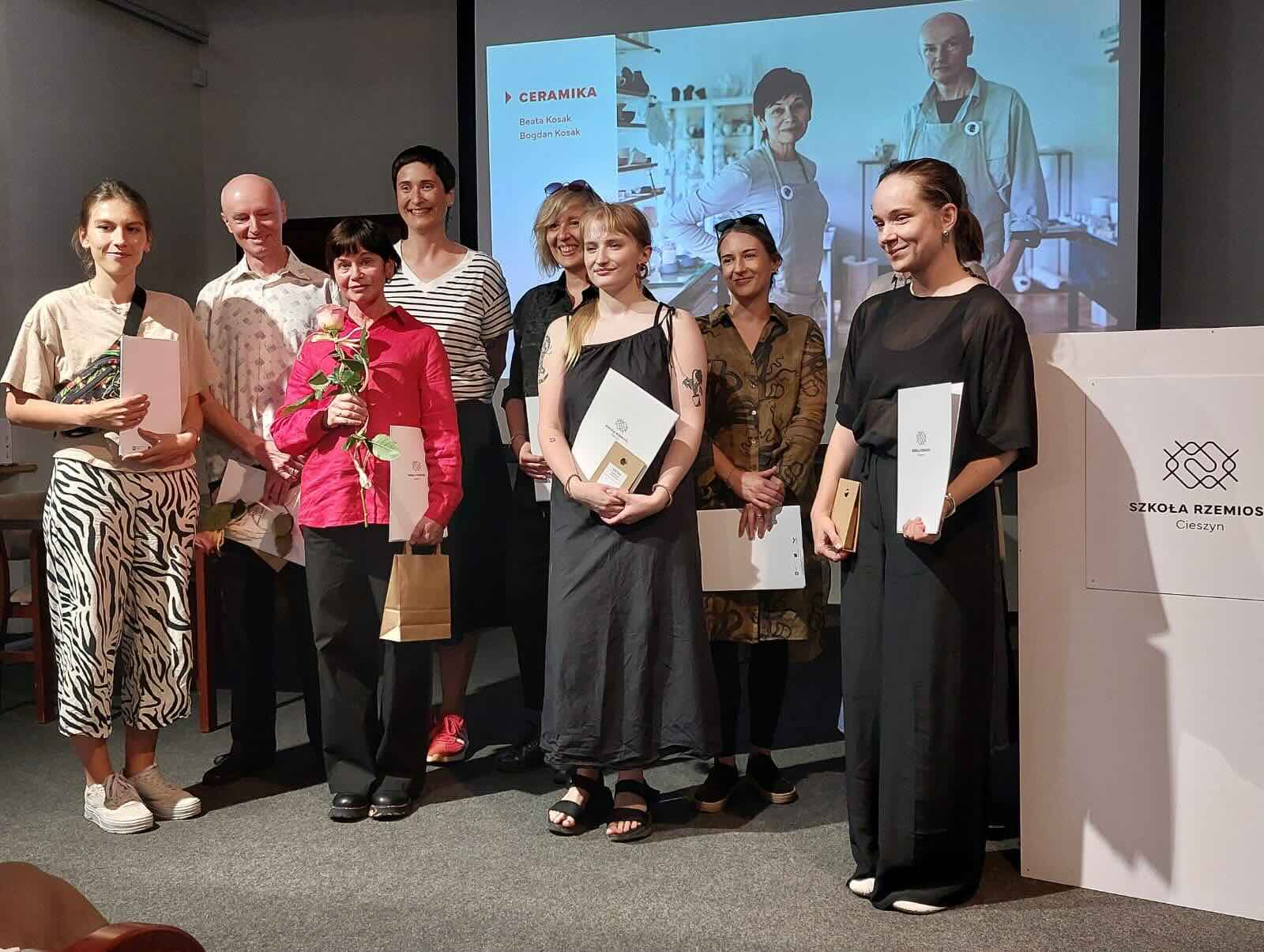
In the photo, Masters Beata and Bogdan Kosak surrounded by our group: from the right, Aleksandra Krupa, Magdalena Cebo, Ada Sędzielewska, (me) Agata M.Nowak, Marta Szałacińska, Karolina Łupińska, and Dominika Cyba-Matus and Monika Wierzbicka, who were hiding somewhere, but were with us.
(Na zdjęciu Mistrzowie Beata i Bogdan Kosak w otoczeniu naszej grupy: od prawej Aleksandra Krupa, Magdalena Cebo, Ada Sędzielewska, (ja) Agata M.Nowak, Marta Szałacińska, Karolina Łupińska, oraz Dominika Cyba-Matus i Monika Wierzbicka, akurat gdzieś się skryły, ale były z nami.)
P.S. Wystawa trwa do 6go lipca! Warto wybrać się do Cieszyna.